Behind the Finished Product: The Hidden Depth of Medical Device Development

Part 2 of our “Behind the Build” series
In Part 1 of this series, we explored the “ugly” but essential rig-building phase of medical device development - where creativity and iteration take the lead.
In this post, we follow that process forward: into the structured, multidisciplinary work that transforms concepts into compliant, manufacturable products.
When people think of medical device design, they often picture the finished product - the polished device seen online or in a users hand. But in reality, that final product is just the tip of the iceberg.
At Oxford Product Design (OPD), our work starts long before a device takes its final form. Behind every successful medical device lies a deeply technical, multidisciplinary process - one that’s driven by the systematic rigour we call New Product Science™ - involving design, engineering, science, and validation - much of which remains invisible to the outside world.
From Understanding Users to Defining Requirements
Every device begins with understanding who will use it and how. Before any engineering starts, our teams work closely with patients, clinicians, technicians, and scientists to map out real-world use: What the device must do, where it will be used, and how people will interact with it.
This forms the foundation of user needs and usability engineering, where we define the device’s functional and ergonomic requirements through observation, workshops, and human factors studies. Understanding how users think, move, and make decisions informs every design choice that follows.
From there, we translate these insights into design inputs and requirements - not just for performance and functionality, but also for regulatory compliance and standards. Working within frameworks such as ISO 13485, ISO 14971, and IEC 62366-1, we help clients ensure their products are designed with safety, usability, and compliance built in from the start.
This stage builds the foundation for everything that follows, and it’s where our New Product Science™ approach begins to take shape.

Engineering the Unseen: Where the Real Work Happens
Once the requirements are defined, the design and engineering journey begins. This is where the real depth of our work becomes visible - internally, at least.
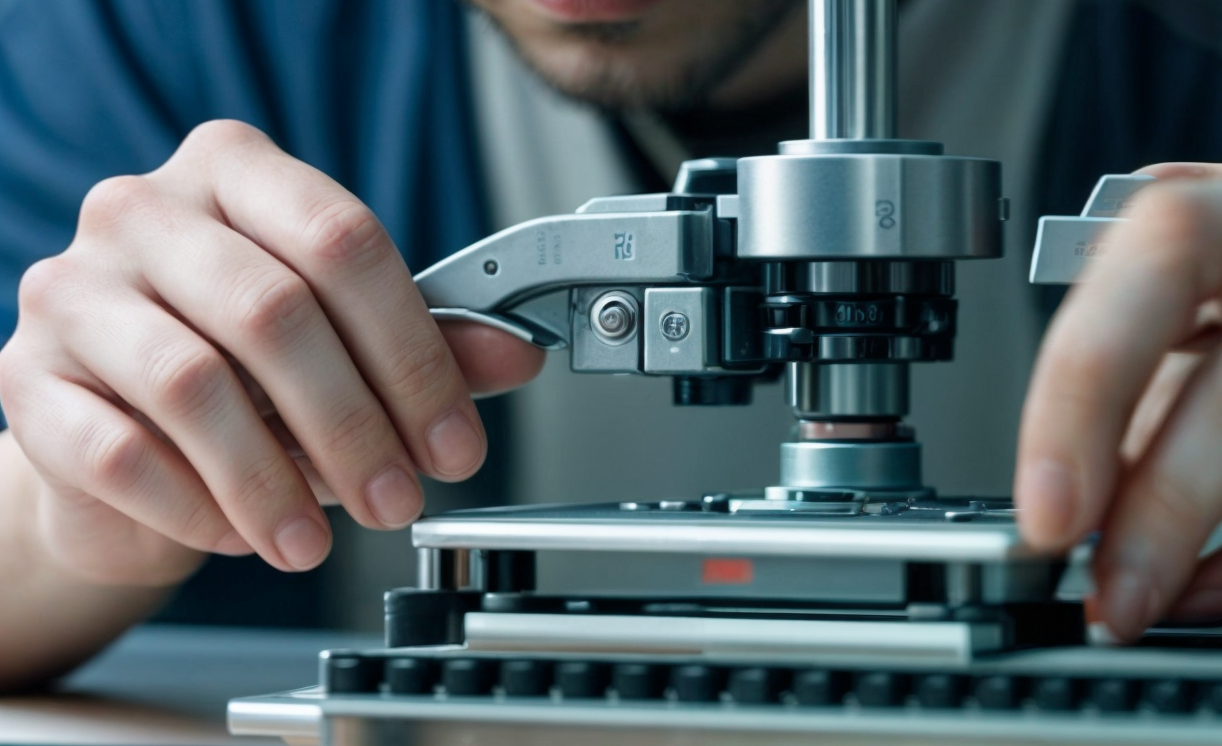
Our teams design and build complex test rigs, fixtures, and functional prototypes to replicate real-world use and verify critical aspects of the design. Many of these systems are larger and more sophisticated than the final product itself.
We’ve built custom rigs incorporating amongst other things:
- Precision motion systems to replicate user actions or to simulate the performance of the final device
- Heating and cooling systems to test thermal control and device performance.
- Integrated cameras and sensors for measurement, analysis, and feedback.
- Specialist jigs and assembly fixtures to support repeatable, accurate tests or builds during development and production.
These tools enable us to understand how every subsystem behaves - mechanical, electronic, thermal, optical, and biological - long before the product reaches the manufacturing line.
It’s a stage that rarely gets seen by clients outside the process, but it’s where much of the true engineering creativity happens and the interfaces that our team spend the most time on before we get to the polished final device.


Building for Reliability, Safety, and Performance
Alongside engineering, our teams continuously evaluate the device against its technical, performance, and safety requirements. We develop verification plans, create custom test protocols, and validate critical functions under controlled conditions.
Whether it’s ensuring a mechanism can withstand thousands of cycles, that optics remain stable under varying temperatures, or that an assembly process achieves micron-level tolerances, this phase ensures the final product will perform reliably in the hands of users.
From Design to Manufacture and Beyond
Once the device has passed through these iterative stages of design, prototyping, and verification, it’s ready for transfer to manufacture - the point at which the finished product finally begins its journey.
Our role doesn’t end there. We support clients through design transfer, ensuring all specifications, validation data, and production documentation meet regulatory expectations and manufacturing needs. This includes building pilot runs, validating assembly jigs, and helping suppliers understand the critical design intent.

Only then does the device transition from a carefully developed prototype into a repeatable, manufacturable product ready for clinical and commercial release.

What You See - and What You Don’t
In the users hands, at an exhibition or online, you might see the final polished device - the culmination of years of work. What you don’t see are the hundreds of design iterations, mechatronic mechanisms, test rigs, fixtures, and validation setups that made it possible.
That’s the unseen side of medical device development: the technical and scientific depth - rooted in New Product Science™ - that turns ideas into robust, compliant, and manufacturable solutions. It’s the continuation of the story we began in Part 1, where exploration gives way to execution.
At OPD, we take pride in delivering not just finished products, but the entire engineering and development journey that makes them possible.
Missed Part 1? Read The Ugly Side of Product Design to see how our development journey begins.
Interested in how OPD can support your next development? Contact our team to discuss how early engagement can help de-risk your programme and accelerate your path to market.